
Running is one of the simplest and most effective ways to stay fit, but it also comes with a risk of injury, especially when the body is pushed faster than it can adapt. The good news is that most running injuries are not random and can be prevented with the right approach.
Why do running injuries happen?
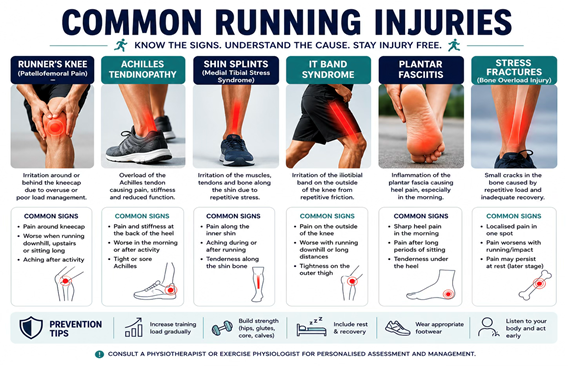
Most running injuries are overuse injuries, meaning they develop gradually rather than from a single incident. This usually happens when there is a mismatch between load and capacity. In simple terms, your body can handle a certain amount of stress, but if you increase your running too quickly or don’t give your body enough time to recover, tissues like muscles, tendons, and even bones become overloaded.
Common contributing factors include sudden increases in training, poor strength, inadequate recovery, previous injuries, and poor load management.
What does the evidence say?
High-quality research shows that training errors are the biggest risk factor for running injuries, while strength training significantly reduces injury risk. Gradual progression of load is essential for both prevention and recovery. There is also strong evidence that low energy availability and poor recovery increase the risk of stress fractures. In simple terms, it is not running itself that causes injury, but how you load your body and how well you recover from it.
How physiotherapy can help
Physiotherapy helps identify the underlying cause of your injury by assessing movement, strength, and load tolerance. It focuses on reducing pain, improving mobility, and guiding you through a structured rehabilitation plan so you can return to running safely and confidently.
How exercise physiology can help
Exercise physiology focuses on building long-term capacity through structured and progressive programs. It helps improve strength, endurance, and resilience, ensuring you not only recover but also reduce the risk of future injuries.
Key takeaway
Running injuries usually occur when load exceeds what your body can handle, especially when combined with poor recovery. With gradual progression, strength training, proper recovery, and good load management, you can run stronger and significantly reduce your risk of injury.
Final thought
Instead of asking whether you should stop running, start asking whether your body is ready for the level of load you are placing on it. Because injury prevention is not about avoiding running, it is about preparing your body for it.
References:
British Journal of Sports Medicine (BJSM) – Strength training reduces running injury risk
British Journal of Sports Medicine (BJSM) – Training errors major cause of injuries
British Journal of Sports Medicine (BJSM) – Low energy availability increases stress fracture risk
Cochrane Database of Systematic Reviews (Cochrane Rev) – Exercise effective for musculoskeletal conditions
Journal of Orthopaedic & Sports Physical Therapy (JOSPT) – Load management key in injury prevention